WHY IN NEWS
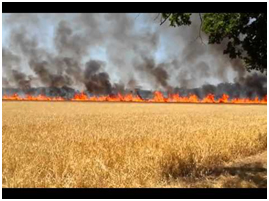
Every year in the month of October, we see a thick blanket of smoke in the air over Punjab, Haryana and extending all the way to Delhi. It is because of paddy stubble burning which not only poses serious health concern for the people but also causes air pollution
This year incidents of stubble burning have registered a five-fold rise in Punjab than those reported in the corresponding period in the past two years.
WHY FARMERS BURN THE PADDY STUBBLE
- Farmers burn the paddy stubble to prepare the field for sowing of wheat as there is little time left between the harvesting of paddy and sowing of wheat.
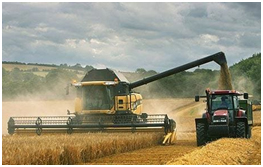
The combine harvester used for harvesting paddy, cuts the crop well above the ground, leaving behind substantial amount of stubble on the field so burning is the best low cost option available. Obviously, if the stubble is not set on fire, then the next crop cannot be sown. Also, there is no financial return for collecting it and disposing it.
- There is paucity of both time and capital with the farmers hence burning is considered fast and cheap method.
- It also kills weeds and pests.
- There is hardly any economically viable alternative to burning. In north regions there is no demand for rice straw as the cattle does not consume it due to high silica content therefore farmers are prompted to burn it on the field instead of incurring a high cost on collecting it. On the other hand wheat residue is not burned because of the availability of technology and its higher economic value as dry fodder.
HARMFUL EFFECTS OF STUBBLE BURNING
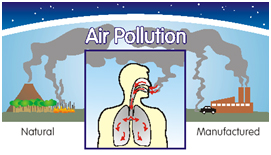
- AIR POLLUTION Every year over a million hectares of paddy stubble is torched in Punjab. It pollutes the environment by adding various greenhouse gases that cause global warming.
- RESPIRATORY PROBLEMS –The pollution is known to cause allergies, asthma and other respiratory problems
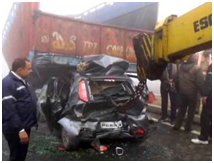
- Dense fog leading to road accidents
- Paddy stubble burning diminishes agricultural productivity by increasing levels of carbon in the soil.
- It also robs the soil of its nutrients and kills the friendly microbes in the soil, thereby depleting soil health to a great extent.
 WHAT THE LAW SAYS
Presently there is no specific law in Punjab to ban straw stubble burning, but every Deputy Commissioner (DC) in Punjab has the power to ban this under section 144 of the CrPC. DCs can issue order under 144 of the CrPC, just before paddy harvesting and wheat harvesting season in Punjab, asking farmers to abstain from stubble burning. The DC also has the power under 188 of the IPC to punish violators but that rarely happens. Under the law, a violator may be punished for up to six months jail and imposed a fine of Rs 1,000.
For political mileage and strengthening vote bank, politicians remain silent on the issue.
The need is to have a stringent law to ban paddy straw burning.
WHAT NEEDS TO BE DONE
It is important to diagnose and address the fundamental problems that forces the farmers to burn the paddy straw on the field and not utilise it for any productive purpose. We need an all-round aggressive approach on behalf of the government, scientists and farmers to curb burning of crop stubbles.
- If farmers are to be prevented from burning, a large number of straw-chopping machines like chopper, shredder, happy seeder, zero tillage, baler has to be made available to the farmers at a low price. Since these are costly equipments government must provide subsidy to farmers. Moreover ploughing the stubble back into the soil would recycle precious nutrients back into the soil improving soil health.
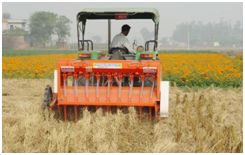
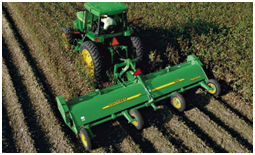
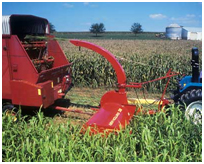
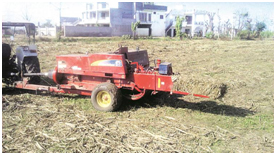
-
- BIOMASS PLA NTS: Paddy straw can be effectively used for power generation, which can overcome the problem of disposal of crop residues and at the same time address power deficit in the region. In case farmers find economic gains in disposing of the crop residue they would certainly mend their ways. Therefore Biomass power plants using paddy stubble offers an economically viable option to burning. We need to incentivise biomass-based power plants in Punjab and Haryana. It would also create employment opportunities for the locals.
-
- INDUSTRIAL USE Presently only a limited quantity of paddy straw is used for cardboard making, packing industries and paper mills. However, new opportunities must be explored through scientific research.
- Compressed straw can be processed as “enriched feed,” by mixing it with molasses, urea and oil cakes which can be fed to camels, goats, and cattle.
- Rice straw/leftover can be converted into vermin-compost that can be used in the field as natural manure. It is not only cheaper but also improves the fertility of the soil, thereby enriching it.
- MASS AWARENESS We need to put in place stringent laws and use media and NGO’s to spread awareness about the harmful effects of burning among farmers. We also need to incentivise panchayats that refrain from burning crop stubble.
All these steps taken simultaneously can maintain food security, increase farm income and improve environmental sustainability.