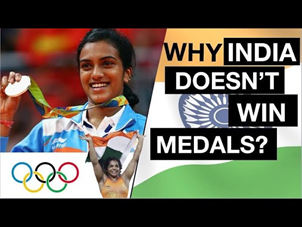
The Tokyo Olympics have showcased the incredible stories of Indian players hailing from villages and small towns who have made a mark in the global arena, be it javelin thrower Neeraj Chopra from Khandra village in Panipat district, wrestler Ravi Dahiya from Nahri village in Sonepat district, discus thrower Kamalpreet Kaur from Kabarwala village in Punjab’s Muktsar district or boxer Lovlina Borgohain from Baro Mukhia village in Golaghat (Assam). Most of them have defied heavy odds — poverty, patriarchy, prejudice — to carve a niche for themselves.
This might be India’s best performance so far yet we have the worst population to medals ratio at the Olympics. Since our first appearance at the Summer Games in 1900, we have managed to get just 35 medals. We have the world’s silver medal population tally (1.35 billion), gold medal population of exuberance (595 million people between ages 0 and 24), and chronic trouble getting medals (35 in its Olympic history, or seven more than Michael Phelps).
Therefore it is important to understand ‘why’ India has not been able to get more Olympic medals before answering ‘how’ to get the same.
WHAT AILS OUR SPORTS
-
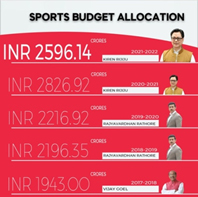
- LACK OF RESOURCES The government has allocated Rs 2596.14 crore (0.01%) to the Ministry of Youth Affairs and Sports for the FY 2021-22, a reduction of Rs 230.78 crore when compared to the amount earmarked initially for the previous year. Even this amount gets underutilized due to corruption and lack of transparency.
-
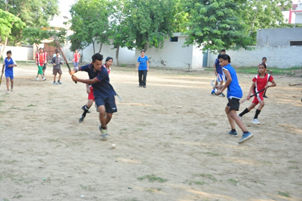
- POOR INFRASTRUCTURE AND TRAINING FACILITIES The basic infrastructure for all the sports (apart from cricket) is no way near the international standards. Moreover, the majority of it is clustered in selected cities.
Lack of sports infrastructure for the masses along with the absence of talent hunt policies clearly shows government apathy for sports development.
- POOR INFRASTRUCTURE AND TRAINING FACILITIES The basic infrastructure for all the sports (apart from cricket) is no way near the international standards. Moreover, the majority of it is clustered in selected cities.
-
- SPORTS ADMINISTRATION In India sports bodies is dominated by politicians and bureaucrats who indulge in corruption and favoritism resulting in poor management of sports. The needs of the athletes are ignored and scarce resources are spent on non-sporting activities. India’s sports governing bodies need to step back from seeking to control every aspect of an athlete’s career and allow them the freedom to choose their coaches and training bases.
-
- CULTURE AND TRADITION Sports is not the first choice as a career for most Indian parents because of high risk, uncertainty, and low rewards. As a result, there is an obsession with academic careers and sports is best considered a hobby. This cultural conditioning reflects in the way the schools and parents treat sports. The first thing to get banned for many children when they reach the 10th or 12th standard is their participation in sports. In fact, we have a saying in Hindi – ‘Kheloge kudoge to honge kharab, padhoge likhoge to banoge nawab’.To be a sporting nation, sports has to be projected as a promising option, with visible career opportunities.

- GENETIC BARRIERS: Genetics shape us in many ways including our potential to excel in sports. It has a large influence over strength, muscle size and muscle fibre composition, lung capacity, flexibility and to some extent endurance. That is why athletes from countries like Kenya, Jamaica have a genetic superiority to excel in track and field events.
- Though India has an enormous population, its “effective participating population” in sports is very small and much out of it is excluded by poor childhood health, physical isolation by poor transportation from the sports centers in the big cities. In the 2020 Global Hunger Index, India ranked 94th out of 107 countries, which is labeled as a serious nutritional deficit situation. This report should have us all thinking about the nutritional deficits which average Indians face and how they may be impacting our ability to bring up a generation of athletes.
- MEDIA: Media largely influence society and give role models to follow. A state-level gold medal winner in athletics gets far less coverage in the media than a student scoring the first rank in some competitive examination. Also, some sports like cricket get the majority of the time because of TRP considerations, neglecting other sports.
WHAT NEEDS TO BE DONE
-
- BUILD A SPORTING CULTURE India cannot win medals before first becoming a sporting nation. We must create a national sports culture which would foster a nation-wide sports consciousness and build a reservoir of sporting talent by providing universal access to sports, as in other countries like USA and Australia. When a family starts choosing sports over movie on a weekend that is when the real breakthrough will come.
To develop a supporting culture we need to improve the social security of the people, give universal access to basic services and remove poverty. People cannot compete and excel in sports when they are struggling for survival.
- LARGE SCALE INFRASTRUCTURE DEVELOPMENT We need state of the art infrastructure to be successful at Olympics. Infrastructure attracts athletes and if the training facilities are close to where the athlete is, the returns are huge.
Considering that most of our Olympic athletes come from lower-middle class backgrounds where the downside to failure is relatively small but the upside for success is huge. Therefore if training facilities in rural areas are close to where the athletes are, crucial time won’t be wasted in travelling and more time would be devoted to the sport. So we need to identify such places and create massive infrastructure.
We must learn from the China’s experience. It established a centralized elite sports system were government run sports training centres at all levels – national, provincial, city and county sports schools were created. They created 6,20,000 sports facilities with 3,50,00 popular sports instructors and another 1,00,000 part-time trainers, working through some 40,000 grassroots sports associations, to involve an estimated 37 % of its population in physical education and sports activities stretching across all age groups
China won a total of 379 medals in 2016 Olympic and Asian Games put together, India’s tally stood at a meagre 55.
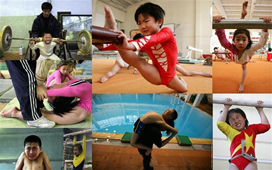
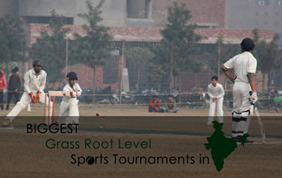
- We need early identification of talent at the grassroots level. For that scientific talent-spotting should be encouraged through district, sub-district and village level sporting competitions, followed by an elaborate system of specialist sports training at special sports schools.
- REVAMPING SPORTS ADMINISTRATION Sports administration must be depoliticised and professionalised for a real change. We need qualified professionals in administrative posts who can create an environment for an athlete to thrive.
- SPORTS UNIVERSITIES We need to set up sports universities with successful Olympians at the helm of affairs with supporting professionals like sport psychologists, physiotherapists, trainers and personal coaches where athletes can prepare and perform better.
- Since as a developing nation we have certain limitations with funds. We need scientific sports mapping in identifying areas across the country where a particular sport can be promoted.
New Zealand, which has a rich marine heritage ,won 10 of its medals in rowing, sailing and canoeing, a natural strength for the country. Jamaica won in running, where it has built a super cluster. Further analysis of winners shows a similar cluster strength, irrespective of the size or economic strength of the country, it wins medals in specific sports — Italy won 7 medals in shooting, 4 in fencing; Cuba 6 in boxing; Kazakhstan 5 in weightlifting; Iran 5 in wrestling; Kenya 13 in athletics (mostly running) and so on.
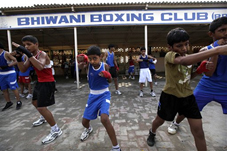
Across India, clusters of excellence by sport can be developed in collaboration with private sector based on traditional strength such as boxing in Haryana, badminton in Hyderabad, boat racing and martial arts (judo and taekwondo) in Kerala .Mallakhamb is popular in Maharashtra, and gymnastics is a natural extension for this. So we need to create special games for special states and build an Olympic level infrastructure around them. Most critically, allow the private sector, foundations like JSW sports of Jindal steel, to take the elite athletes to the next level as they did by supporting Neeraj Chopra.
- ROLE MODELS We need to create role models to inspire our youth. Kapil dev, Gavaskar were the role models in 1980’s ;Sachin,Dravid and Ganguly in 90’s; Dhoni and Sehwag in early 2000;Kohli and Rohit after 2010 are to a large extent responsible for the growth and popularity of cricket in the country.
Hopefully Neeraj Chopra, Ravi Dahiya,Lovlina Borgohain,Bajrang Punia, PV Sindhu’s success would go a long way in motivating children to take up sports.
- IPLISATION OF OTHER SPORTS Franchise system guarantees more facilities, international exposure, and financial support to the players, which can improve our performances in Olympics.

Lastly, government needs to provide an enabling environment, ensure that budgets are not cut, instead invest in building a solid school and junior level sports infrastructure and create a system which is free of stifling bureaucracy and politics, and is truly merit-driven.